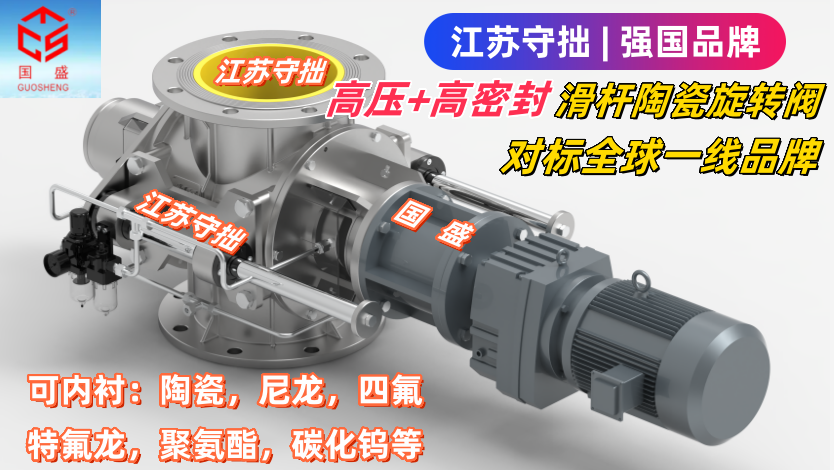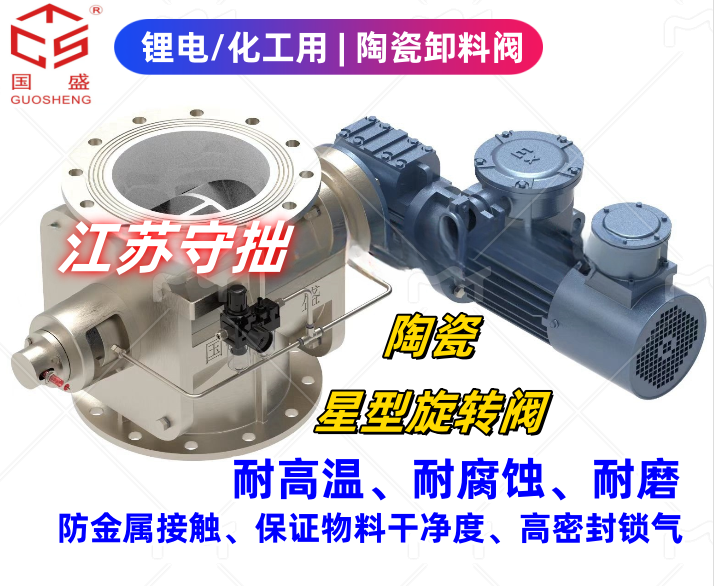


| 品名 | 特氟龍旋轉(zhuǎn)閥,特氟龍星型卸料閥,內(nèi)襯特氟龍旋轉(zhuǎn)閥,不銹鋼噴涂特氟龍旋轉(zhuǎn)閥,耐腐蝕旋轉(zhuǎn)閥,耐磨旋轉(zhuǎn)閥,鋰電旋轉(zhuǎn)閥,鋰電星型卸料器 |
| 輸送物料 | 粉料,粉體,粉末,顆粒 |
| 應(yīng)用行業(yè) | 鋰電,化工,制藥,冶金 |
| 型號 | DN50~DN500,非標(biāo)定制 |
| 特點 | 耐腐蝕,耐高溫,防粘,耐磨,可選氣密封 |
| 品牌 | 江蘇守拙,國盛商標(biāo) |
| 聯(lián)系電話(陳經(jīng)理) | 18068546632 |
Spray-coated Teflon rotary valve, DN200. material bulk density 0.5~0.7. filling rate 0.6. rotor volume 8L, gas seal, front and rear packing + labyrinth seal ring, design temperature ≤200℃, SS304. power 1.1KW, dust explosion-proof.
內(nèi)襯特氟龍是一種將特氟龍(PTFE)或聚四氟乙烯(F4)等特殊材料涂覆在設(shè)備內(nèi)部的一種技術(shù)。這種技術(shù)可以將設(shè)備的內(nèi)部表面涂覆上一層特殊材料,從而提高設(shè)備的耐腐蝕性、耐高溫性、防粘性、耐磨損性和耐化學(xué)性等方面的性能。
內(nèi)襯特氟龍的特點有:
1. 耐腐蝕性好:特氟龍材料是化學(xué)惰性的,能夠在高濃度酸堿和其他有機物中具有高度的化學(xué)穩(wěn)定性。
2. 耐高溫性好:特氟龍材料能承受高達+260℃的高溫工況。
3. 防粘附性能好:特氟龍對粘附物質(zhì)具有特殊的抗粘性能,可以避免流體因黏附而產(chǎn)生的結(jié)垢和堆積。
4. 耐磨損性能好:特氟龍表面硬度高、耐磨損,能夠有效地抵御設(shè)備內(nèi)部因物料磨損而導(dǎo)致的損壞。
江蘇守拙主要定制高端旋轉(zhuǎn)閥:超級工程/重大項目/科研項目定制旋轉(zhuǎn)閥。【電話/微信咨詢:陳經(jīng)理18068546632】
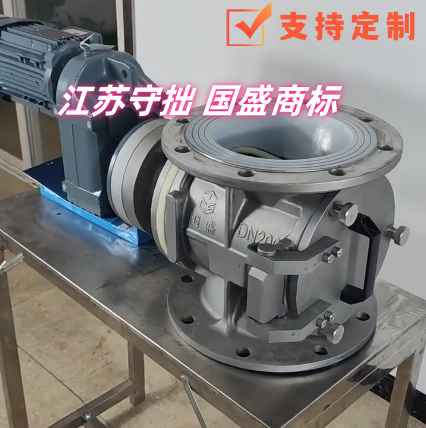
部分材質(zhì)選用內(nèi)襯噴涂特氟龍旋轉(zhuǎn)閥的案例:
腐蝕性顆粒接近粉體,往常壓反應(yīng)釜投料,常溫最高30~40度,葉輪也要防腐,間隙要小,需要能耐有機溶劑,和物料接觸部分全部按特氟龍,QJW、BZ投料星型卸料閥 600-700Kg/批/h,材質(zhì)S31603.DN250.
物料為小鹽粒和部分石膏糊糊混雜,粘度很小不太粘壁,帶有一定水分,較容易結(jié)塊,顆粒度直徑不超2厘米。倉和物料溫度70℃左右。間歇變頻運行,每小時0.3至1.5立方。因為有腐蝕和輕微粘度,需要不銹鋼加噴涂特氟龍。
內(nèi)襯特氟龍卸灰閥,尺寸400x400.設(shè)專用檢修孔,星型卸灰閥葉片需要做特氟龍?zhí)幚恚苯鹦袠I(yè),鋼廠用。
《掃二維碼-添加 陳經(jīng)理 微信-咨詢內(nèi)襯特氟龍旋轉(zhuǎn)閥》

Case studies on the selection of materials for rotary valves with Teflon-coated inner linings:
The corrosive particles are close to powder form. They are usually fed into the reactor at atmospheric pressure, with a maximum temperature of 30~40 degrees Celsius. The impeller also needs to be corrosion-resistant, with small clearances. It must be able to withstand organic solvents. All parts that come into contact with the material are coated with Teflon. The QJW and BZ feeding star-shaped discharge valves have a capacity of 600-700Kg/batch/h and are made of S31603 material with a DN250 size.
The material consists of a mixture of small salt grains and some gypsum paste, with low viscosity that doesn't adhere to the wall much. It contains a certain amount of moisture and tends to clump easily, with particle sizes not exceeding 2 centimeters in diameter. The temperature of the silo and the material is around 70℃. It operates intermittently with variable frequency, delivering 0.3 to 1.5 cubic meters per hour. Due to corrosion and slight viscosity, stainless steel with Teflon coating is required.
The ash discharge valve is lined with Teflon, with dimensions of 400x400. A dedicated maintenance hole is provided. The blades of the star-shaped ash discharge valve need to be treated with Teflon. It is used in the metallurgical industry, specifically in steel plants.
-

—— 售后服務(wù)
我們將繼續(xù)利用技術(shù)產(chǎn)品優(yōu)勢,不斷地改善設(shè)備工藝,加強質(zhì)量管理,完善售前、售后服務(wù),為顧客提供高質(zhì)量的產(chǎn)品和服務(wù),衷心與您攜手前進、誠信合作、共創(chuàng)美好未來!
-
—— 高質(zhì)量產(chǎn)品服務(wù)
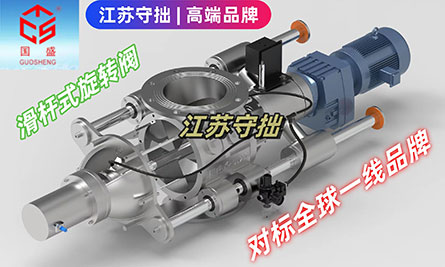
專業(yè)定制高端旋轉(zhuǎn)閥,科研項目定制旋轉(zhuǎn)閥,重大項目級定制旋轉(zhuǎn)閥,替代國外進口品牌旋轉(zhuǎn)閥。建立了有效的質(zhì)量管理體系和的售后服務(wù)體系,為顧客提供高質(zhì)量的產(chǎn)品和服務(wù)。
-

—— 誠信經(jīng)營
我們本著誠信經(jīng)營的原則,以技術(shù)、服務(wù)做為企業(yè)的核心競爭力,積極進取,勇于開拓,經(jīng)過多年的努力拼搏,已成為行業(yè)中的佼佼者。