
| 產(chǎn)品名稱 | 鍋爐拋料機(jī),鍋爐上料機(jī),拋料機(jī)廠家,鍋爐生物質(zhì)上料機(jī),鍋爐自動(dòng)上料機(jī),生物質(zhì)顆粒鍋爐拋料機(jī),鍋爐給料機(jī),鍋爐生物質(zhì)輸送機(jī),鍋爐燃料上料機(jī) |
| 輸送物料 | 生物質(zhì)顆粒、木屑、碎木片、稻殼、農(nóng)業(yè)廢棄物、煤炭、垃圾衍生燃料、污泥、炭黑等 |
| 應(yīng)用場(chǎng)景 | 工業(yè)鍋爐、生物質(zhì)發(fā)電廠、供暖鍋爐 |
| 尺寸 | 非標(biāo)定制 |
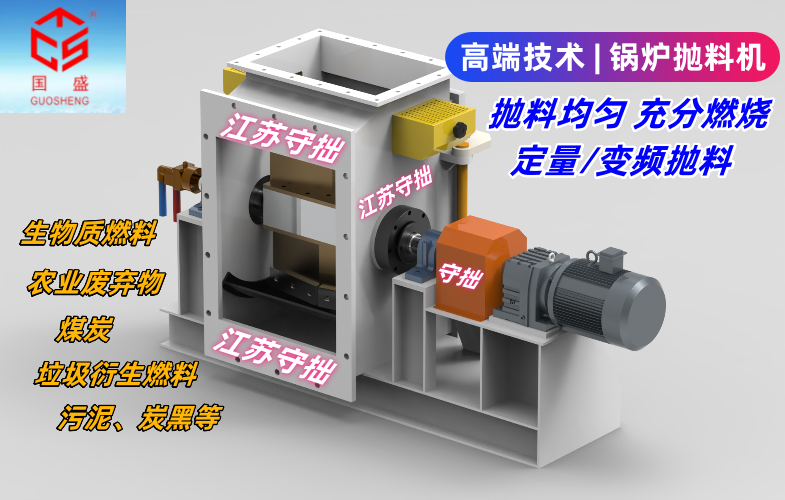
| 拋料機(jī)特點(diǎn) | 拋料均勻,充分燃燒,定量/變頻拋料,精準(zhǔn)給料 |
| 守拙優(yōu)勢(shì) | 對(duì)標(biāo)全球一線品牌,強(qiáng)大研發(fā)能力 |
| 聯(lián)系電話(陳經(jīng)理) | 18068546632 |
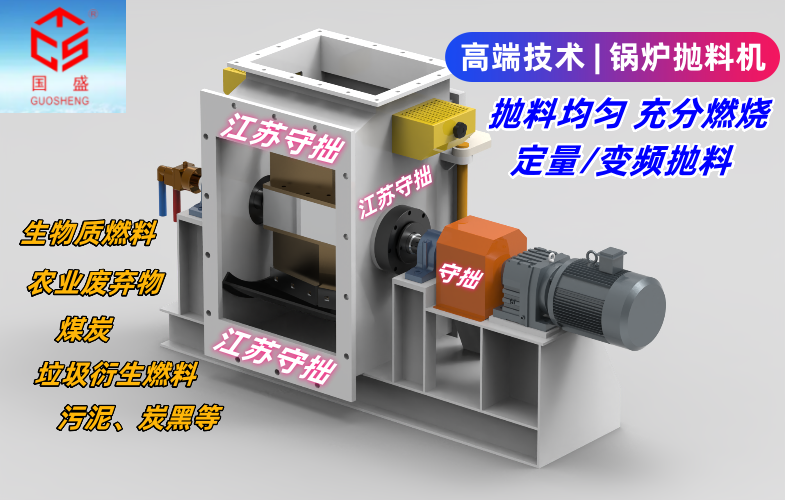
鍋爐拋料機(jī)是一種專門用于將固體燃料(常見的是生物質(zhì)顆粒或碎料)均勻、連續(xù)地拋撒到鍋爐爐排上進(jìn)行燃燒的自動(dòng)化設(shè)備。
您可以把它想象成一個(gè)為鍋爐“喂食”的“機(jī)械手”,但它不是簡(jiǎn)單地傾倒,而是通過一個(gè)旋轉(zhuǎn)的葉輪將燃料“拋”出去。
一、核心組成部分:
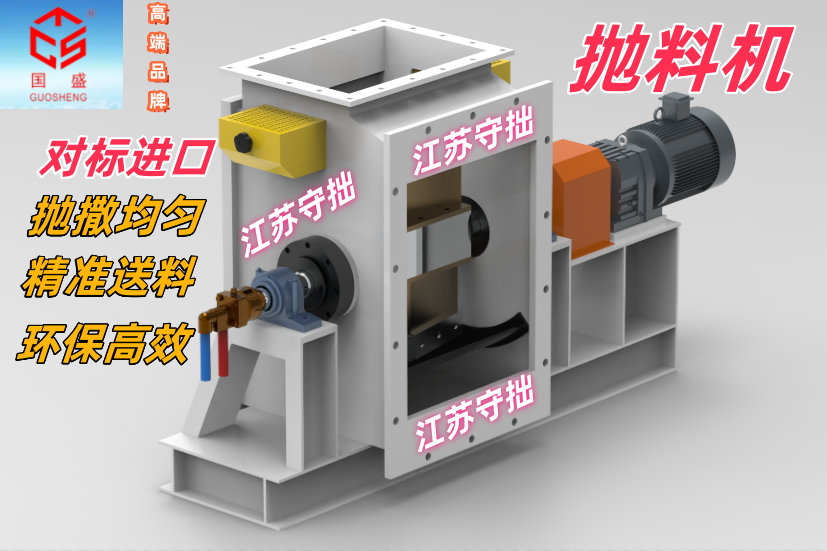
一臺(tái)典型的鍋爐拋料機(jī)通常包括以下幾個(gè)關(guān)鍵部分:
進(jìn)料系統(tǒng):通常由一個(gè)螺旋輸送機(jī)(絞龍)組成,負(fù)責(zé)將來自料倉(cāng)的燃料穩(wěn)定地輸送到拋撒機(jī)構(gòu)。
拋撒機(jī)構(gòu):這是設(shè)備的核心。它由一個(gè)高速旋轉(zhuǎn)的葉輪(類似風(fēng)扇)構(gòu)成,葉輪在電機(jī)的驅(qū)動(dòng)下,將螺旋輸送機(jī)送來的燃料通過離心力拋撒出去。
拋料管/導(dǎo)向槽:連接在拋撒機(jī)構(gòu)出口的管道,用于引導(dǎo)被拋出的燃料準(zhǔn)確地飛向爐排的指定區(qū)域。
驅(qū)動(dòng)電機(jī):為螺旋輸送機(jī)和拋撒葉輪提供動(dòng)力。
控制系統(tǒng):與鍋爐的主控系統(tǒng)連接,根據(jù)鍋爐的燃燒需求(如蒸汽壓力或溫度),自動(dòng)調(diào)節(jié)進(jìn)料量和拋撒速度,實(shí)現(xiàn)精準(zhǔn)給料。【電話/微信咨詢:陳經(jīng)理18068546632】

二、主要特點(diǎn)與優(yōu)勢(shì):
自動(dòng)化程度高:實(shí)現(xiàn)了鍋爐給料的完全自動(dòng)化,大大降低了司爐工的勞動(dòng)強(qiáng)度,無需人工頻繁上料。
燃燒效率高:通過均勻拋撒,燃料在爐排上鋪展得薄而均勻,與空氣接觸更充分,燃燒更完全,提高了鍋爐的熱效率,節(jié)省了燃料。
燃料適應(yīng)性廣:特別適合燃燒生物質(zhì)顆粒、木屑、碎木片、稻殼等形狀不規(guī)則的固體燃料。
爐排保護(hù):避免了燃料直接砸向爐排,對(duì)爐排有一定的保護(hù)作用。
環(huán)保性好:由于燃燒充分,有助于減少黑煙、一氧化碳等不完全燃燒產(chǎn)物的排放。
三、主要應(yīng)用場(chǎng)景:
鍋爐拋料機(jī)主要應(yīng)用于使用固體生物質(zhì)燃料的鍋爐系統(tǒng),常見于:
工業(yè)鍋爐:為工廠提供工藝蒸汽或采暖熱源。
供暖鍋爐:用于學(xué)校、醫(yī)院、商場(chǎng)、住宅小區(qū)等區(qū)域的集中供暖。
生物質(zhì)發(fā)電廠:作為鍋爐的核心上料設(shè)備。【電話/微信咨詢:陳經(jīng)理18068546632】


四、與其它上料方式的區(qū)別:
為了更好地理解,我們可以對(duì)比一下常見的鍋爐上料方式:
與鏈條爐排的“前拱給煤”區(qū)別:傳統(tǒng)的鏈條爐排鍋爐,煤是從爐排前部由煤斗依靠重力落下。這種方式對(duì)于流動(dòng)性好的塊煤有效,但對(duì)于輕質(zhì)、蓬松的生物質(zhì)燃料容易造成搭橋、堵塞。拋料機(jī)則能主動(dòng)地將燃料“噴射”到爐排中后部。
與皮帶輸送機(jī)的區(qū)別:皮帶輸送機(jī)只是簡(jiǎn)單地將燃料運(yùn)送到爐膛入口并傾倒,無法實(shí)現(xiàn)均勻鋪撒,容易造成燃料堆積,影響燃燒效果。
鍋爐拋料機(jī)是現(xiàn)代生物質(zhì)鍋爐系統(tǒng)中一個(gè)非常關(guān)鍵且高效的輔機(jī)設(shè)備。它通過機(jī)械拋撒的方式,解決了生物質(zhì)等輕質(zhì)、不規(guī)則固體燃料的自動(dòng)化、均勻化給料難題,是提升鍋爐燃燒效率和實(shí)現(xiàn)自動(dòng)化運(yùn)行的重要保障。【電話/微信咨詢:陳經(jīng)理18068546632】

The boiler spreader is an automated device specifically designed to evenly and continuously spread solid fuel, most commonly biomass particles or chips, onto the boiler grate for combustion.
You can think of it as a "robotic arm" that "feeds" the boiler, but instead of simply dumping it, it "throws" the fuel out through a rotating impeller.
1. Core components:
A typical boiler thrower usually includes the following key parts:
Feeding system: usually consists of a screw conveyor (auger) that is responsible for steadily delivering fuel from the silo to the dispensing mechanism.
Spreading mechanism: This is the core of the equipment. It consists of a high-speed rotating impeller (similar to a fan) driven by a motor. The impeller throws out the fuel sent by the screw conveyor through centrifugal force.
Throwing tube/guide slot: A pipe connected to the outlet of the throwing mechanism, used to guide the thrown fuel to accurately fly to the designated area of the grate.
Drive motor: Provides power for the screw conveyor and the dispersing impeller.
Control system: Connected to the main control system of the boiler, it automatically adjusts the feeding amount and spreading speed according to the combustion requirements of the boiler (such as steam pressure or temperature), achieving precise feeding.
II. Main Features and Advantages:
High degree of automation: The complete automation of boiler feeding has been achieved, greatly reducing the labor intensity of the stoker and eliminating the need for frequent manual feeding.
High combustion efficiency: Through uniform spreading, the fuel is spread thinly and evenly on the grate, allowing for more thorough contact with the air and more complete combustion, which improves the thermal efficiency of the boiler and saves fuel.
Wide fuel adaptability: It is particularly suitable for burning irregularly shaped solid fuels such as biomass particles, wood chips, crushed wood chips, and rice husks.
Grate protection: It avoids the fuel directly hitting the grate, which has a certain protective effect on the grate.
Environmentally friendly: Due to the full combustion, it helps reduce the emission of incomplete combustion products such as black smoke and carbon monoxide.
III. Main application scenarios:
The boiler thrower is mainly used in boiler systems that use solid biomass fuels, and is commonly found in:
Industrial boiler: provides process steam or heating source for factories.
Heating boiler: used for central heating in schools, hospitals, shopping malls, residential areas, etc.
Biomass power plant: as the core feeding equipment of boiler.
IV. Difference from other feeding methods:
To better understand, we can compare common boiler feeding methods:
The difference between the "front arch coal feeding" of the chain grate and the traditional chain grate boiler is that in the traditional chain grate boiler, coal falls from the front of the grate by gravity from a coal hopper. This method is effective for lump coal with good fluidity, but it is prone to bridging and blockage for lightweight and fluffy biomass fuels. The thrower can actively "spray" fuel to the middle and rear of the grate.
The difference between it and a belt conveyor is that a belt conveyor simply transports fuel to the entrance of the furnace and dumps it, without achieving uniform spreading, which can easily lead to fuel accumulation and affect combustion efficiency.
The boiler spreader is a crucial and efficient auxiliary device in modern biomass boiler systems. It solves the problem of automated and uniform feeding of lightweight and irregular solid fuels such as biomass through mechanical spreading, and is an important guarantee for improving boiler combustion efficiency and achieving automated operation.
-

—— 售后服務(wù)
我們將繼續(xù)利用技術(shù)產(chǎn)品優(yōu)勢(shì),不斷地改善設(shè)備工藝,加強(qiáng)質(zhì)量管理,完善售前、售后服務(wù),為顧客提供高質(zhì)量的產(chǎn)品和服務(wù),衷心與您攜手前進(jìn)、誠(chéng)信合作、共創(chuàng)美好未來!
-
—— 高質(zhì)量產(chǎn)品服務(wù)
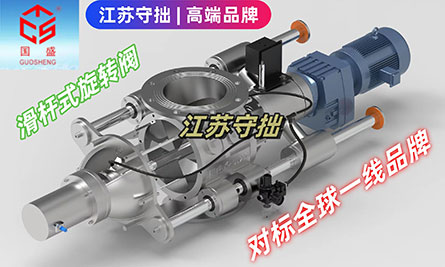
專業(yè)定制高端旋轉(zhuǎn)閥,科研項(xiàng)目定制旋轉(zhuǎn)閥,重大項(xiàng)目級(jí)定制旋轉(zhuǎn)閥,替代國(guó)外進(jìn)口品牌旋轉(zhuǎn)閥。建立了有效的質(zhì)量管理體系和的售后服務(wù)體系,為顧客提供高質(zhì)量的產(chǎn)品和服務(wù)。
-

—— 誠(chéng)信經(jīng)營(yíng)
我們本著誠(chéng)信經(jīng)營(yíng)的原則,以技術(shù)、服務(wù)做為企業(yè)的核心競(jìng)爭(zhēng)力,積極進(jìn)取,勇于開拓,經(jīng)過多年的努力拼搏,已成為行業(yè)中的佼佼者。